
You are standing inside a 400 square foot room in Nagpur. There are 35 students expected every morning at 7 AM for JEE preparation. The walls are up. The whiteboard is fixed. The projector is mounted. And now your contractor asks: what chairs should we order? This is the moment most coaching class owners either make a smart long term decision or spend twice the money two years later replacing furniture that failed. Choosing the right coaching class chair is not just about price per unit. It is about how long each chair lasts under daily use, how comfortable a student stays across a three hour session, and whether the chair fits the room when you need to pack it down or rearrange for a test. By the end of this guide, you will know exactly which chair types exist, what separates a good specification from a weak one, and how to match your choice to your specific room and student base.
A coaching class chair is not office furniture. It is not home furniture either. It sits in a category of its own because the conditions it faces are more demanding than most buyers realise. Students sit for two to four hours at a stretch. Chairs are moved, stacked, dragged across floors, and in many cases folded and unfolded dozens of times each week. The chair that looks fine in a product photo may wobble after 90 days of that treatment if the frame gauge is too thin or the joints are welded poorly.
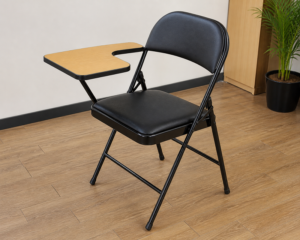
The coaching class chair must do three things well at once. It must hold a student comfortably for long sessions without causing back fatigue. It must survive physical handling that would ruin a standard home chair in months. And it must include a usable writing surface because most coaching environments do not pair chairs with separate desks. These three requirements together rule out most cheap plastic options and most premium office chairs, leaving a specific segment of institutional seating as the practical answer.
If you are also planning the tables and storage in your coaching room, read our guide on space saving classroom furniture for Indian institutes.
Coaching class chairs work best when they combine a steel or CRC mild steel frame, a cushioned seat with at least 18 inches of width, and a removable or foldable MDF writing pad. This combination handles a load capacity of up to 120 kg, survives daily folding cycles, and keeps students comfortable across long study sessions.
Walk into ten different coaching institutes across Pune, Kota, or Hyderabad and you will see four chair types in use. Each has a genuine place depending on the budget, room size, student age group, and session length. Understanding what each type actually offers prevents you from ordering 80 units of the wrong one.
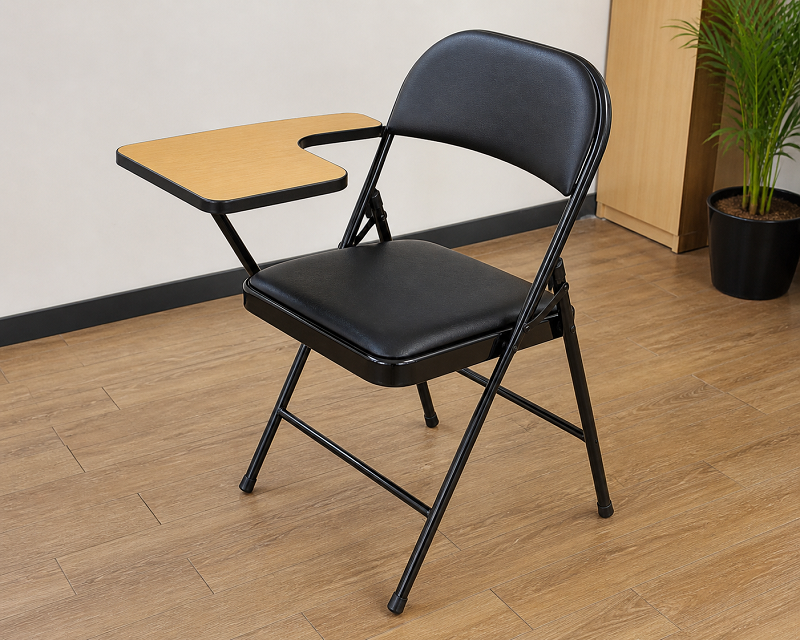
This is the most versatile coaching class chair available at this price range. The frame is typically built from cold rolled coil CRC mild steel pipe with a black powder coated finish. The writing pad is MDF, which resists termites and handles pen pressure without cracking. The chair folds flat, which means you can stack it against a wall during school hours and set the room up fresh for your evening batch in under ten minutes. Seat width on quality versions runs to 18 inches, which is important for older students and adults. Weight capacity on well built versions reaches 100 to 130 kg.
The plastic moulded chair is the lowest cost option and works well for primary level tuitions and junior coaching groups where sessions run under 90 minutes. Nylon Grade 6 with glass fill material is the specification to look for. It wipes clean in seconds, resists moisture, and will not corrode. The significant drawback is the absence of a writing surface and the discomfort during sessions longer than two hours. For a senior secondary or competitive exam coaching setup, this chair is the wrong tool for the job.
Fixed desk chairs bolt the writing surface permanently to the seat frame and do not fold. They are common in permanent school setups where the room layout never changes. For coaching institutes that run multiple subjects or multiple age groups in the same room, the inability to rearrange is a real operational problem. These chairs also cannot be stored when space is needed for other uses.
This is the premium option in the coaching chair category. It adds a foam cushioned seat and often a cushioned backrest to the folding writing pad frame. The comfort difference across a three hour session is significant. Faburaa’s Eduseat Chair falls in this category, built with a PU foam cushioned seat on a CRC steel frame with an MDF writing pad that adjusts to multiple angles. If your coaching centre runs sessions of two hours or more and you want students returning batch after batch, the comfort difference this chair provides is worth the additional cost per unit.
| Chair Type | Best For | Price Range (per unit) | Key Limitation |
|---|---|---|---|
| Folding Chair with Writing Pad | Coaching centres, exam halls, flexible classrooms | Rs 1,800 to Rs 3,500 | No under-seat storage |
| Plastic Moulded Chair | Budget bulk orders, junior classes | Rs 450 to Rs 900 | No writing surface attached |
| Fixed Desk Chair | Permanent classrooms, schools | Rs 2,500 to Rs 5,000 | Cannot be rearranged or stored |
| Cushioned Writing Pad Chair | Premium institutes, long sessions | Rs 2,800 to Rs 4,500 | Higher cost per unit |
The frame is where coaching chairs fail most often, and where the gap between a low cost and a mid range option becomes visible within the first year. The key specification is the pipe gauge. CRC mild steel pipe with a high strength surface finish is the industry standard for institutional chairs that handle daily use. A frame built from this material with proper welded joints can bear 100 to 130 kg without flex.
Powder coating is not optional. In Indian classrooms, chairs are dragged across concrete floors, left in humid monsoon conditions, and sometimes stored outdoors between batches. A powder coated finish, especially a glossy black finish, resists scratching and does not rust the way untreated metal does. Rubbered glides at the base of each leg protect both the floor and the chair, and reduce the scraping noise that disrupts sessions when students shift their weight.
Consider Rohit, an architect designing a 60 seat coaching centre in Ahmedabad. He initially specified a chair with a painted metal frame at Rs 1,200 per unit to stay within the furniture budget. Within eight months of the centre opening, 14 chairs had developed joint wobble because the frame gauge was 1 mm thinner than the institutional standard. Replacing those 14 units cost more than the price difference he had originally saved. Frame gauge and joint quality are specifications worth confirming before you place a bulk order.
The writing pad is the surface your students will use for four to six hours every day. Its material, size, and adjustability determine whether it is genuinely useful or just a marketing feature. MDF, medium density fibre board, is the correct material for this surface. It is termite resistant, smooth enough for handwriting and light laptop use, and does not warp under normal humidity conditions the way standard plywood does.
Pad size matters more than buyers realise. A pad that is too narrow cannot hold an open notebook flat. A pad that is too large extends awkwardly past the chair frame and creates a tipping risk when a student places a heavy bag on the edge. The functional range for a coaching class writing pad is 20 to 24 inches in width and 14 to 16 inches in depth. Adjustability, meaning the ability to shift the pad angle or detach it entirely, allows the same chair to double as standard seating when the writing surface is not needed.
At Faburaa, the Eduseat Chair writing pad is built from termite free MDF board and designed to be adjustable to multiple positions. This means a student can angle the surface for writing, lay it flat for a laptop, or remove it entirely when the chair is used for a group discussion circle. The detachable design also simplifies cleaning, which matters in coaching environments where chalk dust and food residue accumulate quickly.
A student sitting on a hard plastic or thin foam seat for three hours will begin shifting and losing focus within 90 minutes. This is not a comfort complaint. It is a physiological response to pressure on the ischial bones, the points where body weight concentrates on a seat surface. Chairs designed for institutional use at lower price points often use Nylon niwar webbing instead of foam. Niwar provides ventilation, which helps in India’s warm climate, but it offers less cushioning than PU foam for extended sessions.
The backrest matters as much as the seat. A backrest that stops below the mid back forces the lumbar spine into flexion over time. This is the posture pattern that causes students to slump forward, rest their head on the desk, and mentally disengage. A backrest that follows the natural S curve of the spine keeps the student upright with less muscular effort. This is what ergonomic design means in practical terms. It is not a marketing label. It is a measurable geometry built into the backrest angle and curvature.
Priya runs a spoken English and competitive exam coaching centre in Pune with three batches of 25 students each. She initially furnished with basic plastic chairs at Rs 600 per unit. After one year, student retention between the first and third month of a course had dropped noticeably, and several students mentioned discomfort during sessions. She replaced 75 chairs with cushioned folding writing pad chairs and saw a measurable improvement in session attendance. Her cost per unit went from Rs 600 to Rs 2,800, but she did not have to replace the chairs again in the following two years.
Ordering too few chairs is an obvious problem. Ordering too many creates a storage issue that coaching centre owners underestimate until the chairs are stacked in the corridor outside the room. The calculation starts with the room dimensions and the chair footprint when unfolded. A standard folding writing pad chair occupies roughly 20 by 22 inches of floor space when a student is seated. For comfortable movement between rows, allow at least 18 inches of clearance between each row of chairs.
For a 400 square foot coaching room, this typically means a maximum usable capacity of 28 to 35 chairs depending on the row arrangement and whether a speaker or tutor needs floor space at the front. Ordering 10 percent above this capacity gives you chairs in reserve without overwhelming your storage. Most folding chairs can be stacked four to six units high against a wall, so a reserve of eight chairs takes up approximately 5 square feet of wall space when folded.
At Faburaa, bulk orders for coaching centres include a room layout consultation at no extra charge for orders above 30 units. This means you share your room dimensions and we work out the row configuration, aisle width, and storage stack position before the chairs are dispatched, so you are not solving a furniture puzzle on delivery day.
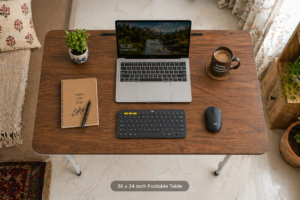
For institutes that also need foldable work tables alongside chairs, see our range of foldable study chairs and tables for coaching rooms.
You now know that a coaching class chair is a functional tool, not a generic seat. The right specification covers frame gauge, powder coat finish, seat width, MDF pad size, foam cushioning, and weight capacity. Choosing the wrong option at a lower price point is the single most common and costly mistake coaching centre owners make when furnishing for the first time.
The most important mistake to avoid: ordering on price alone without confirming the frame gauge and joint welding standard.
Before placing a bulk order, take these four steps:
If you are looking for a cushioned folding writing pad chair built for long coaching sessions, Faburaa’s Eduseat Chair is worth exploring at faburaa.com/product/study-chair-for-students
The best coaching class chair for sessions of two hours or more is a cushioned folding chair with a writing pad and a CRC steel frame. The cushioned seat reduces pressure fatigue, the writing pad replaces the need for a separate desk, and the folding frame makes the chair practical for multi-batch rooms. Look for a minimum seat width of 18 inches and a weight capacity of at least 100 kg. Confirm the frame uses powder coated mild steel, not painted mild steel, as powder coating resists moisture and daily handling far better.
A 400 square foot coaching room typically accommodates 28 to 35 chairs when using a standard folding writing pad chair with a floor footprint of roughly 20 by 22 inches. This assumes 18 inches of row clearance between seats and dedicated floor space for the tutor at the front. Add 10 percent above your target student count as a reserve. Folding chairs stack four to six high, so the reserve adds minimal storage burden.
Yes, provided the frame is built from CRC mild steel pipe with properly welded joints and a powder coated finish. A well specified folding coaching class chair handles a load of 100 to 130 kg and withstands hundreds of fold and unfold cycles over multiple years. The weakness in lower cost versions is typically thin frame gauge or paint finish instead of powder coat. Always verify the gauge and finish specification before placing a bulk institutional order.
MDF, or medium density fibre board, is the correct material for a coaching class writing pad. It is termite resistant, provides a smooth surface for handwriting and light laptop use, and does not warp under normal indoor humidity. Standard plywood degrades faster in humid Indian conditions and develops surface splinters that damage notebooks and cause discomfort. Avoid writing pads listed simply as wood or board without specifying MDF grade.
Choose a plastic moulded chair only for junior sessions under 90 minutes where no writing surface is needed and budget is the primary constraint. For sessions of two hours or more, a cushioned writing pad chair is the better investment. The comfort difference directly affects student retention and concentration across longer batches. The higher upfront cost per unit is typically recovered within the first year through lower replacement rates and better student satisfaction.
Look for a minimum weight capacity of 100 kg for a coaching class chair that will serve mixed age groups including adults attending competitive exam preparation. Premium institutional versions rated to 120 or 130 kg provide a safety margin and handle the structural stress of repeated folding more reliably over time. The capacity figure should come from the manufacturer, not inferred from the product category alone.
Yes, and this is one of the most practical use cases for folding writing pad chairs. The MDF pad provides a stable writing surface without a separate desk, the chair sets up and packs down quickly between exam sessions, and the folded stack occupies minimal corridor space. Confirm the pad size before purchasing for exam use. A pad of at least 22 inches wide is needed to comfortably hold an A4 answer sheet with room for a pencil case alongside.
Always. A sample order of one to two units allows you to test frame rigidity, pad adjustability, fold and unfold ease, and seat comfort across an actual session before committing to a full room quantity. Most institutional furniture suppliers, including Faburaa, accommodate sample requests before bulk orders. The cost of a sample is negligible against the risk of discovering a specification problem after 60 or 80 units have been delivered.